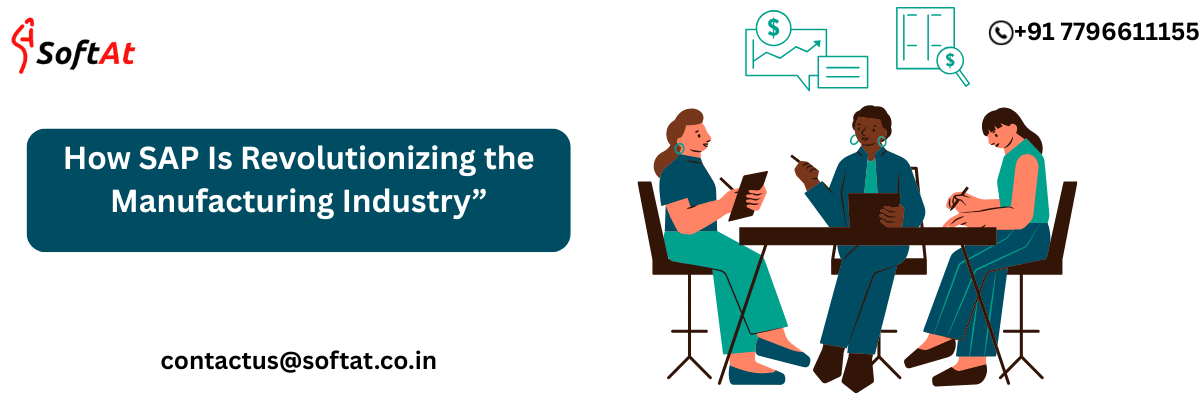
Manufacturing has always been the heartbeat of global industry, constantly evolving through waves of innovation—from the steam engine to robotics, and now, to intelligent digital transformation. In 2025, one of the most profound drivers of this evolution is SAP. For decades, SAP has been synonymous with enterprise software, but its impact on manufacturing has reached new heights. Today, SAP isn’t just managing operations—it’s redefining how manufacturers design, produce, and deliver goods in a smarter, faster, and more sustainable way. Understanding how SAP is revolutionizing the manufacturing industry is essential for professionals, businesses, and employees eager to stay competitive in an increasingly digital world.
At its core, SAP’s approach to manufacturing revolves around connecting every part of the production ecosystem—from suppliers and machines to employees and customers—within one unified digital framework. Traditional manufacturing relied heavily on manual coordination and data stored in silos, often leading to delays, inefficiencies, and missed opportunities. SAP has turned that model on its head by enabling real-time data exchange across the entire value chain. Imagine a factory where every machine communicates with the ERP system, predicting maintenance needs, optimizing workflows, and ensuring production never stops. That’s the power of SAP’s intelligent manufacturing solutions in action.
One of the most significant transformations SAP has brought to the manufacturing industry is the rise of the “smart factory.” A smart factory leverages Internet of Things (IoT) sensors, artificial intelligence, and advanced analytics to automate and optimize operations. SAP’s manufacturing platforms collect data from machines and production lines, analyze it instantly, and recommend adjustments to improve efficiency. For example, if a sensor detects that a machine is overheating, SAP’s system can trigger a maintenance request before a breakdown occurs, minimizing downtime and saving costs. This predictive capability is helping manufacturers shift from reactive to proactive operations—a fundamental shift in industrial management.
Another major way SAP is revolutionizing manufacturing is through integration. In many manufacturing environments, different departments often use separate systems—one for procurement, another for production, and yet another for logistics. SAP bridges these gaps through its integrated ERP solutions, which bring all business functions under a single digital platform. This means that when a change happens in one area, it’s automatically reflected across the entire organization. For example, if a supplier delays a shipment of raw materials, SAP’s system updates production schedules, inventory forecasts, and delivery timelines instantly. The result is seamless coordination and greater agility in responding to market changes.
Data has become the new fuel of the manufacturing industry, and SAP ensures manufacturers make the most of it. Through advanced analytics and machine learning, SAP empowers organizations to gain actionable insights from their operations. These insights help identify inefficiencies, forecast demand, and optimize resource utilization. In industries like automotive or electronics, where precision and timing are everything, SAP’s real-time analytics ensure production stays synchronized with customer demand, reducing waste and maximizing profitability. By turning raw data into business intelligence, SAP gives manufacturers the ability to make smarter, faster decisions every day.
Sustainability is another area where SAP’s influence is reshaping the manufacturing landscape. As global industries face growing pressure to reduce their carbon footprint, SAP provides tools that help manufacturers monitor energy consumption, track emissions, and ensure compliance with environmental standards. Companies can now use SAP’s systems to simulate the environmental impact of production changes before they happen, helping them choose more sustainable materials or processes. In doing so, SAP is not only improving operational efficiency but also enabling manufacturers to take meaningful steps toward building a greener, more responsible future.
Beyond technology, SAP’s contribution lies in how it supports collaboration across the supply chain. In the modern manufacturing environment, no company operates in isolation. Suppliers, logistics providers, distributors, and retailers all play vital roles. SAP’s supply chain management solutions create a connected ecosystem where data flows freely among stakeholders. This transparency improves trust, reduces lead times, and strengthens relationships. For instance, when demand spikes unexpectedly, a company using SAP can alert its suppliers immediately, adjust production levels, and ensure customer orders are fulfilled without disruption.
Customization is another factor driving SAP’s growing dominance in manufacturing. Unlike traditional ERP systems that often required rigid structures, SAP’s modern platforms allow businesses to tailor their solutions to specific industry needs. Whether it’s high-volume production, complex assembly lines, or batch-based manufacturing, SAP provides flexible tools that adapt to different production models. This adaptability is crucial in 2025, as manufacturers strive to balance efficiency with the need to produce personalized products for diverse markets.
One of the most compelling aspects of how SAP is revolutionizing the manufacturing industry is its focus on human empowerment. While automation and digitalization are transforming the shop floor, SAP ensures people remain at the center of innovation. With intuitive interfaces and AI-powered assistance, SAP makes it easier for employees to monitor operations, troubleshoot issues, and collaborate across teams. In factories where digital dashboards display live performance metrics, workers can identify problems immediately and take corrective action. This human-centric design bridges the gap between technology and people, creating a more intelligent and empowered workforce.
SAP’s cloud-based solutions have also played a pivotal role in making digital transformation more accessible to manufacturers of all sizes. Previously, advanced ERP systems were primarily available to large corporations due to cost and infrastructure limitations. Now, with scalable cloud deployment, even small and mid-sized manufacturers can leverage SAP’s capabilities without heavy upfront investment. This democratization of technology ensures that innovation is no longer limited to industry giants—it’s available to everyone willing to embrace change.
In 2025 and beyond, one of the defining trends in manufacturing is the integration of artificial intelligence and automation into day-to-day decision-making. SAP’s advanced AI algorithms help predict demand, schedule maintenance, and optimize production lines automatically. Machine learning capabilities continuously refine processes based on performance data, leading to constant improvement. This self-optimizing manufacturing environment marks a new era where businesses can achieve higher output with lower costs while maintaining impeccable quality.
SAP’s impact on the manufacturing industry extends beyond efficiency and profit—it’s about resilience. The disruptions of recent years have shown how vulnerable supply chains can be to global events. SAP’s systems help manufacturers build resilience by providing visibility across every layer of their supply chain. When disruptions occur, whether due to logistics issues or material shortages, SAP enables quick scenario planning, allowing companies to adapt instantly. This ability to foresee and respond makes SAP indispensable for manufacturers operating in a volatile global market.
As digital transformation accelerates, the skills needed to thrive in manufacturing are evolving too. Understanding how SAP is revolutionizing the manufacturing industry is not just beneficial for companies but also for their employees. Professionals who gain hands-on experience with SAP’s manufacturing solutions position themselves at the forefront of industrial innovation. Whether you work in production planning, logistics, quality control, or management, learning SAP can open doors to career advancement and global opportunities.
Ultimately, SAP’s role in transforming manufacturing goes beyond technology—it’s about reimagining the entire value chain. By integrating data, processes, and people, SAP enables manufacturers to achieve operational excellence, sustainability, and agility all at once. The factories of the future are already here, powered by intelligent systems that think, adapt, and learn—and SAP is the engine driving this revolution forward.
If you’re ready to deepen your understanding of SAP and its transformative role in manufacturing, now is the time to act. Explore our collection of expert-led guides, advanced learning materials, and professional courses that will help you master SAP’s tools and strategies. Whether you’re a business leader looking to modernize operations or an individual seeking to build a career in digital manufacturing, investing in SAP knowledge is the first step toward shaping the intelligent factories of tomorrow.
YOU MAY LIKE THIS
10 Real-World SAP ABAP Programming Examples (with Code!
Building custom SAP Fiori applications for improved sales efficiency